
In this article
One of the nicest reasons to learn a language is to feel more comfortable when someone invites you to sit down.
A cup of tea or coffee gives you something to talk about straight away: how you like it, who made it or whether you would enjoy another. In Arabic-speaking settings, it can also introduce you to local traditions of welcome.
There is no single tea-and-coffee culture across the Arabic-speaking world. Recipes, serving customs and preferences vary between regions, homes and generations. Two examples make a lovely starting point.
Moroccan mint tea: a welcome in a glass
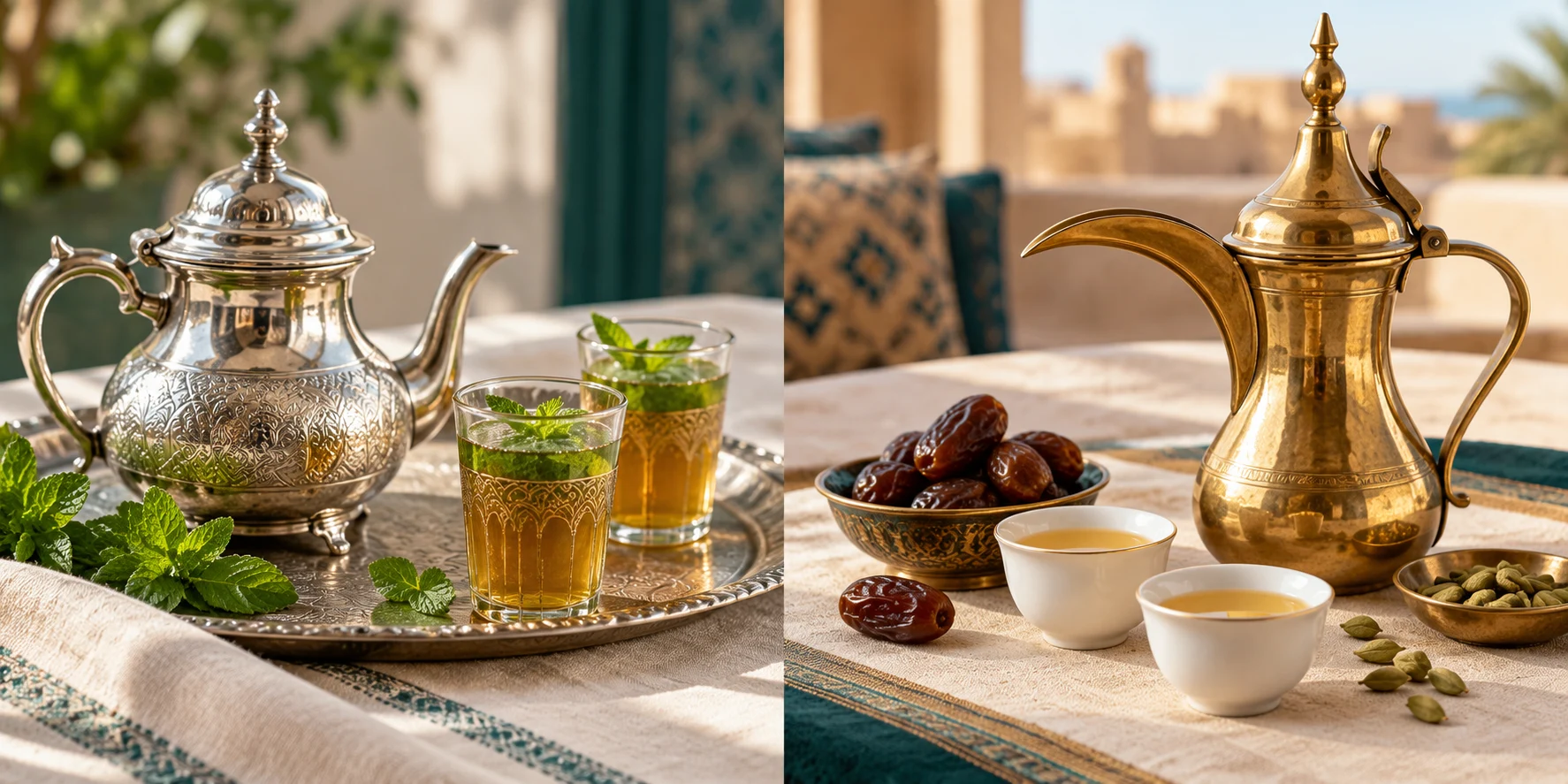
The Moroccan National Tourist Office describes green mint tea as a drink deeply rooted in local traditions, often served in small glasses to welcome guests.[1] The invitation makes room for a pause: you sit together, share a drink and begin getting to know one another.
For a beginner, this is a useful reminder that language is about participation. Recognising the word for tea, thanking your host or asking about the mint lets you contribute something of your own. You do not need a long conversation prepared in advance.
Arabic coffee: a small cup, a generous gesture
In Dubai, traditional Arabic coffee is commonly associated with hospitality. It may be flavoured with cardamom and other spices, poured from a dallah and served in small handleless cups called finjaan, often alongside dates.[2] This is one regional example; coffee preparation across Arabic-speaking communities is far from uniform.
UNESCO recognises “Arabic coffee, a symbol of generosity” as intangible cultural heritage. The original 2015 inscription involved the UAE, Saudi Arabia, Oman and Qatar; the extended inscription in 2024 also included Jordan.[4]
The heritage description records customs such as serving guests and older people first, and a small shake of the cup to show that the drinker has finished.[3] Treat these as customs to notice in the relevant setting, rather than rules to impose on every café or household. When unsure, following your host’s lead is a good start.
A few words to bring to the table
These simple Modern Standard Arabic phrases give you a starting point. Local everyday wording and pronunciation may differ.
| Arabic | Say it approximately | Meaning |
|---|---|---|
| شاي أم قهوة؟ | shaay am qahwa? | Tea or coffee? |
| شاي، شكرًا | shaay, shukran | Tea, thank you. |
| قهوة، شكرًا | qahwa, shukran | Coffee, thank you. |
| بدون سكر | bidoon sukkar | Without sugar. |
Original beginner phrase examples. Transliteration is simplified; it is a pronunciation aid rather than an exact phonetic transcription.
Make a small conversation out of it
Try a two-person practice at home. One person offers tea or coffee; the other chooses, says thank you and adds a preference. Swap roles, then change one detail. This gives you a reason to listen and respond instead of repeating a phrase without context.
Learning about a drink will not tell you everything about a culture. It can, however, give you a warm and ordinary place to start asking questions.
Explore our beginner Arabic courses in Melbourne, or try a free shadowing story with your next cup of tea.
Sources & further reading
- Moroccan National Tourist Office — Food & Drinks: Mint tea
Green mint tea, small glasses and welcoming guests in Morocco.
- Dubai Department of Economy and Tourism — Take a sip of these traditional Arabic drinks
Arabic coffee, cardamom and other spices, the dallah, handleless finjaan cups and dates in a Dubai context.
- UNESCO Intangible Cultural Heritage — Arabic coffee, a symbol of generosity
Hospitality and serving customs documented in the multinational heritage element.
- UNESCO — Decision 19.COM 7.B.55, 2024
The original 2015 inscription and its 2024 extension to include Jordan.